Thursday, 3 April 2014

Some Thoughts based on 6 Nations penalty data

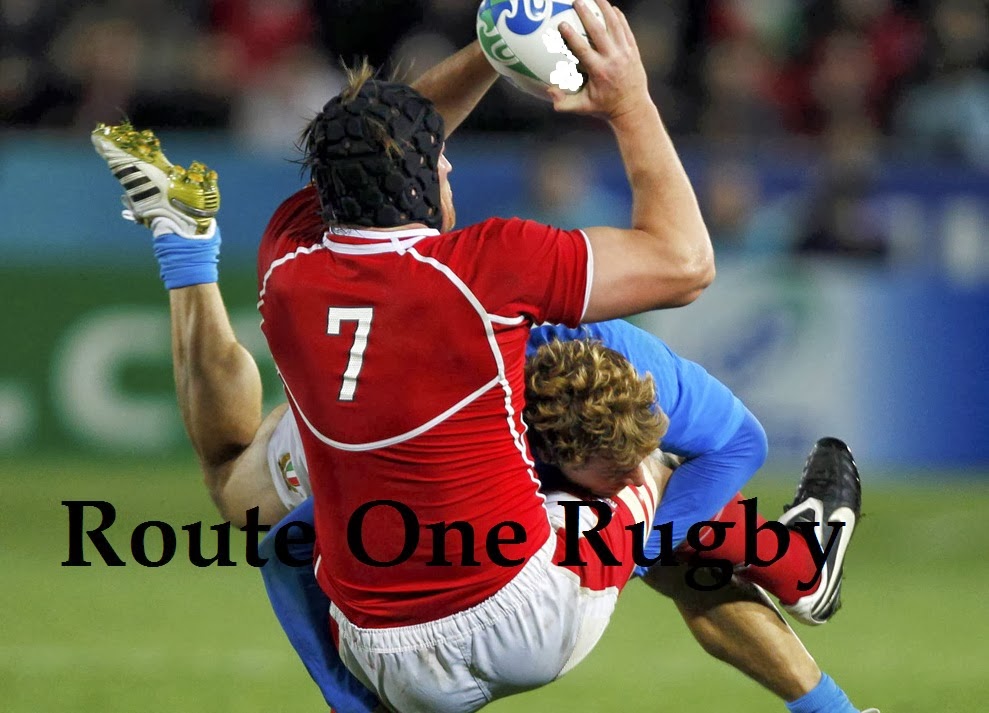
                                                             At its best                         (c) Getty Images
At the onset of the 6 Nations tournament when looking at some of the talking points for each team I discussed the penalty counts incurred last year and the impact that had for the respective sides. At the time I thought it would be interesting to look back once the Championship had concluded to examine the penalty count as a reflection of Referee performance. You often hear from the respective media of each nation that so-and-so don't like their country and always referee them harshly, and thought it would be interesting to see if there was any evidence of that during these 15 games.

Additionally, the last couple weeks of Super Rugby action has seen some terrible officiating recently that led to a discussion of relieving referees from their duties (which frankly should have happened but alas, another battle). There has been a lot of different debate about where to place the fault of these disputed contests: should it be on the players, who are committing infractions or is the referee and his interpretation wrong? Both sides have merit, poor officiating can have a disturbing effect on the direct outcome of a game, while players can also make poor choices.

The 6 Nations is a great spectacle because each match has the potential to be won by either side (even if it's a small chance) and because each point is valuable. Referees play a role in the outcome of matches, as their interpretation of each action . The point of this article though isn't to get bogged down in semantics about the intent of a referee, so let's look at some statistics!

Friday, 7 March 2014

Scotland: A Review

(c) PA Photos
"I talked about their game plan, their tactics, it's very difficult to see what they're doing" Jeremy Guscott on Scotland.

After watching the Scotland/England round 2 match-up I was very bothered by Scotland's performance because it felt like the first two rounds of the Championship at that time just ran so counter to the performances I remembered from last year. So I started to dig into the numbers a bit more and see just how delusional I had been about what happened last year.

In my 6 Nations preview for Scotland (here) I talked about their improved attack and scoring prowess in last year's tournament, and I was trying to be positive, but I wasn't looking or thinking about the whole picture at the time to understand the flaws in their game. I think as we have seen in their first three games in 2014, that positivity that was even there in the summer tour has mostly disappeared into a big team-wide malaise. Under Scott Johnson the team has secured some memorable wins and had the feeling of an improving side, but like his successor Andy Robinson those wins were built on the flawed performance of the other side (or their kicker *cough*Australia*cough*) and dogged defence by the Scots and when they got the result it was not often because they were the best side on the pitch. 

Thursday, 27 February 2014

Pondering the scrums during le Crunch, 2nd Half

(c) Martin Bureau, AFP

Picking up from my previous post where we looked at the scrums in the first half of the England/France round 1 game, we will examine the engagements of the second half and see how and why France continued its dominance at this set piece. 

Second Half

We have to wait 11 minutes for the first test, and by this point an entirely new French front row is on, and Mako Vunipola has just stepped on to the field for his 14th cap to replace Marler at loosehead for England. Other things happened in the game as Luther Burrell has scored his first try in his first Test, and England now lead 18-16. I am going to take a leap of faith to assume that the impact of Yoann Maestri for Alexandre Flanquart in the French second row is negligible. Either way, early shifts for these replacements who will shape the possession for each team for the remainder of the game. 

Friday, 21 February 2014

Pondering the scrum during le Crunch, 1st half.

Joe Marler (centre) and Nicolas Mas battle on the pitch (c) PA Photos


I thought it would be interesting to look at the scrum battles during le Crunch to see how they told the story of the game and the ultimate French victory. This was a battle not just of great front rows but of great packs that are among the best in the game. The game itself was a great spectacle, provided you are a French fan or at least anti-England, and worthy of a repeat view (especially now that you will be more informed from reading the post). 
Watching the game a second time, even with a focus on the scrums I still found it hard to see all that was going on during the first (well, technically second) look. I will say that a second or third look was needed to capture the infractions and it was impressive that Nigel Owens and his officials caught the more glaring issues and penalized the players accordingly. In almost every scrum there are probably 2 or 3 things that could be called (mostly flankers unbinding early) but it is usually the action in the front row that incurs the ire of officials, so this post will really be focusing on those engagements and trying to look at some of the technical aspects that resulted in penalties. Well, my interpretation of the engagements and penalties. Even if you don't like scrums this should be interesting.
*I have a bunch of screen shots but I only looked at the BBC feed, so if the Canal+ (?) footage provided different angles, well, guess you're shit out of luck. 

Saturday, 1 February 2014

Dawn of the 6 Nations, pt. 6

With the 6 Nations quite literally around the corner, I wanted to start Route One by talking about each country and some of the possible talking points going into this tournament. I'll place the countries into different posts and I'll save my thoughts on the Round 1 matches for separate posts, and hopefully this doesn't take terribly long. They are arranged in absolutely random order:

Wales: Wales enter the 2014 6 Nations as two-time defending champions, having won the Championship in convincing style during the last round against a Grand Slam-chasing England in 2013, and pulling off the clean sweep 2012. Since 2005 the Welsh have been champions 4 times, 3 of those in Grand Slam fashion, so their success has been sustained and there is reason to think that they can continue to be one of the top teams in the Northern Hemisphere. Warren Gatland has overseen 3 of those teams and will continue on as the national coach until 2019, such is the faith the WRU have in his ability. 

Dawn of the 6 Nations, pt. 5

With the 6 Nations quite literally around the corner, I wanted to start Route One by talking about each country and some of the possible talking points going into this tournament. I'll place the countries into different posts and I'll save my thoughts on the Round 1 matches for separate posts, and hopefully this doesn't take terribly long. They are arranged in absolutely random order:

Italy: Italy enjoyed its most successful 6 Nations tournament since the 2006-2007 championship as the Azzurri recorded wins over France and Ireland in front of their home supporters and appeared to take big steps in their progress under head coach Jacques Brunel. However, it will be a very big accomplishment to repeat that success this year as both France and Ireland will be much improved, and outside of a competitive game against Scotland it is hard to see a win coming against England or Wales. That is not to say it isn't possible, but both significant form, defense and luck will be needed to scrape something into the W column. 

Dawn of the 6 Nations, pt. 4

With the 6 Nations quite literally around the corner, I wanted to start Route One by talking about each country and some of the possible talking points going into this tournament. I'll place the countries into different posts and I'll save my thoughts on the Round 1 matches for separate posts, and hopefully this doesn't take terribly long. They are arranged in absolutely random order:

Ireland: The introduction of the Joe Schmidt era began with a bang with an easy rout against Manu Samoa, but the squad came crashing down to Earth the next week with a defeat to an Australian team still finding its feet under Ewen McKenzie. The Irish were able to turn it around the next week with an immaculate first 40 minutes against the All Blacks, before the game was taken from them at the death by Ryan Crotty's try, and a first victory against the New Zealand was lost. If the performance shown against the All Blacks can be the new standard set by Schmidt then Ireland look to be capable of making a big turn around this tournament from the lows they suffered last year by finishing 5th.